How a game comes about
From the brief to the first round played at the event. We develop games entirely in-house, from the game idea through the programming to the built housing. A look at the steps in between.
It starts with the message, not the game
A game for a brand begins with the question of what people should take away afterwards. Only then do we look for the game mechanic that makes exactly that tangible.
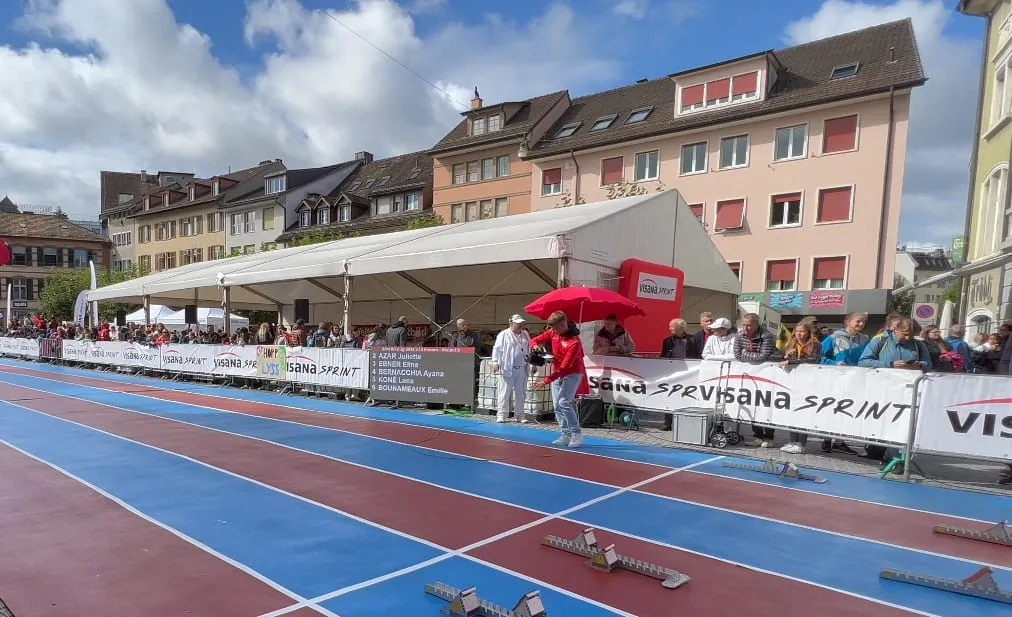
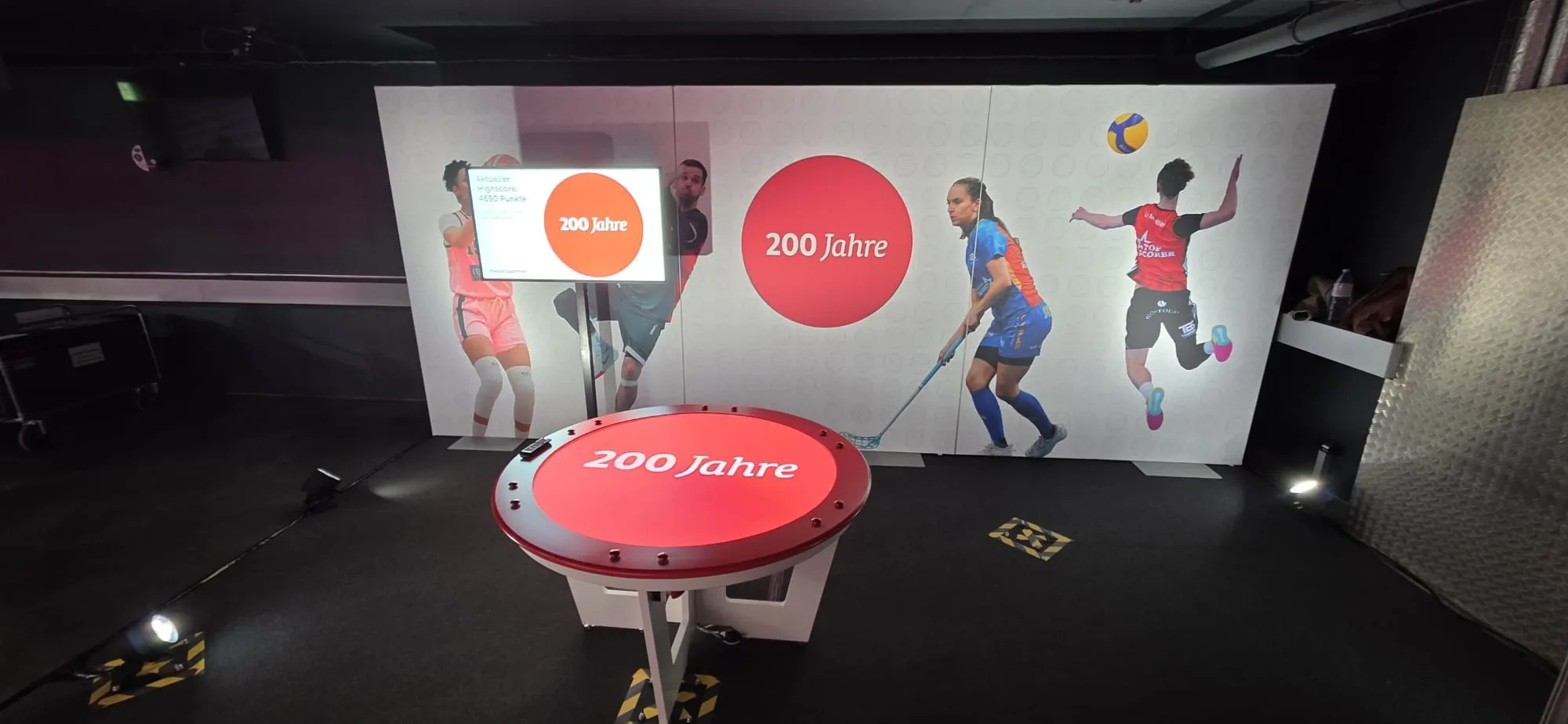
For the Visana Sprint Roadshow the ambassador was the sprinter Mujinga Kambundji. So we built a game in which children try to beat her 100-metre record on a buzzer. For the Mobiliar anniversary one game had to bring four indoor sports together. We took the theme “round” literally: a round Pong in a basketball look on a round LED table.

How a game comes about: Beda Binder on the Visana game (Vimeo)
Understood in seconds
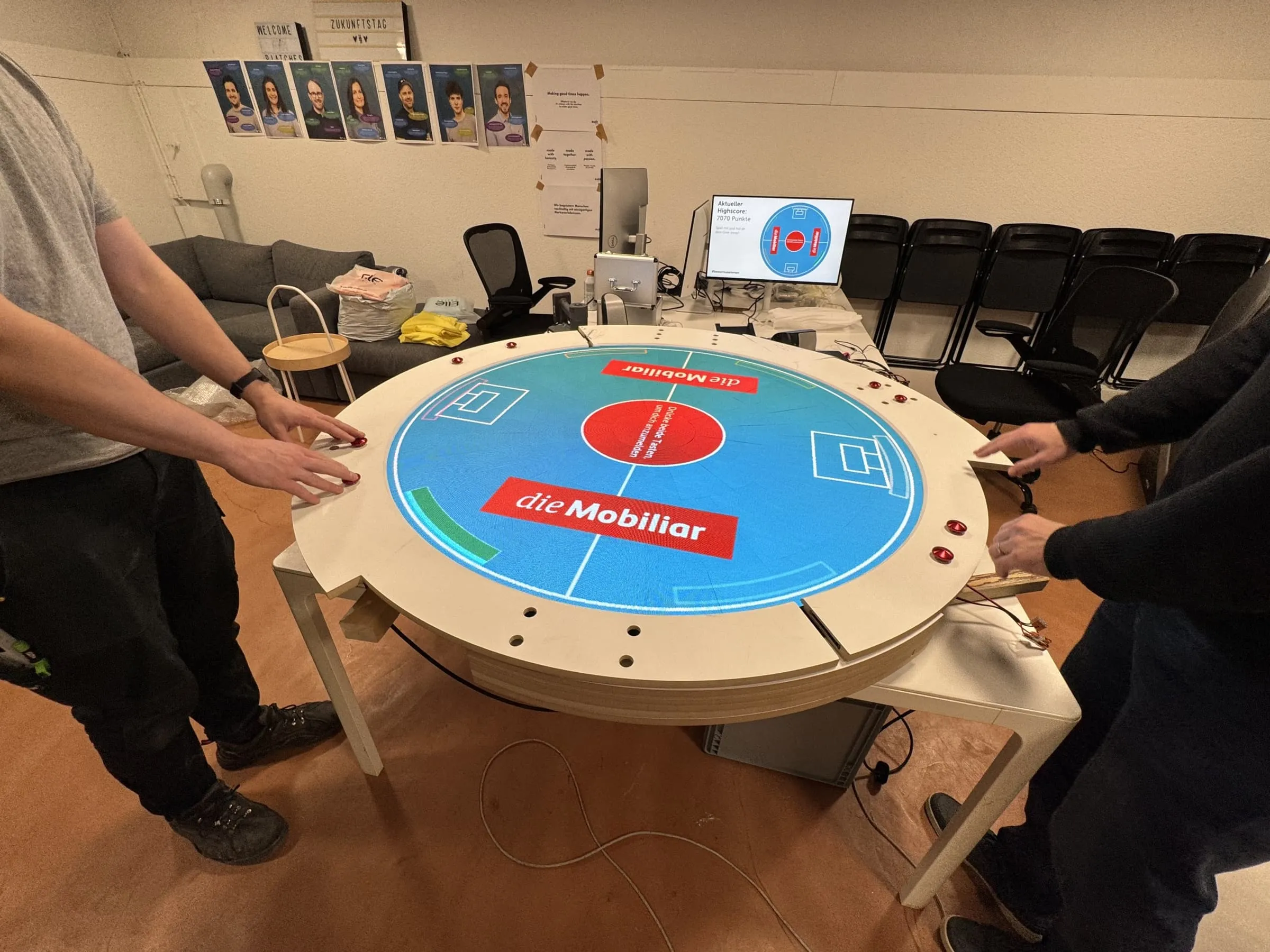
At an event nobody has time for instructions. A good game is therefore understood within a few seconds and playable right away. In the Mobiliar Pong each person controls their position with two arcade buttons, left and right. Up to six play at once and try together to keep the balls in play for as long as possible.
Cooperative rather than competitive, short rounds and a highscore: that makes for a quick start and still leaves people wanting a second round.
A prototype early on
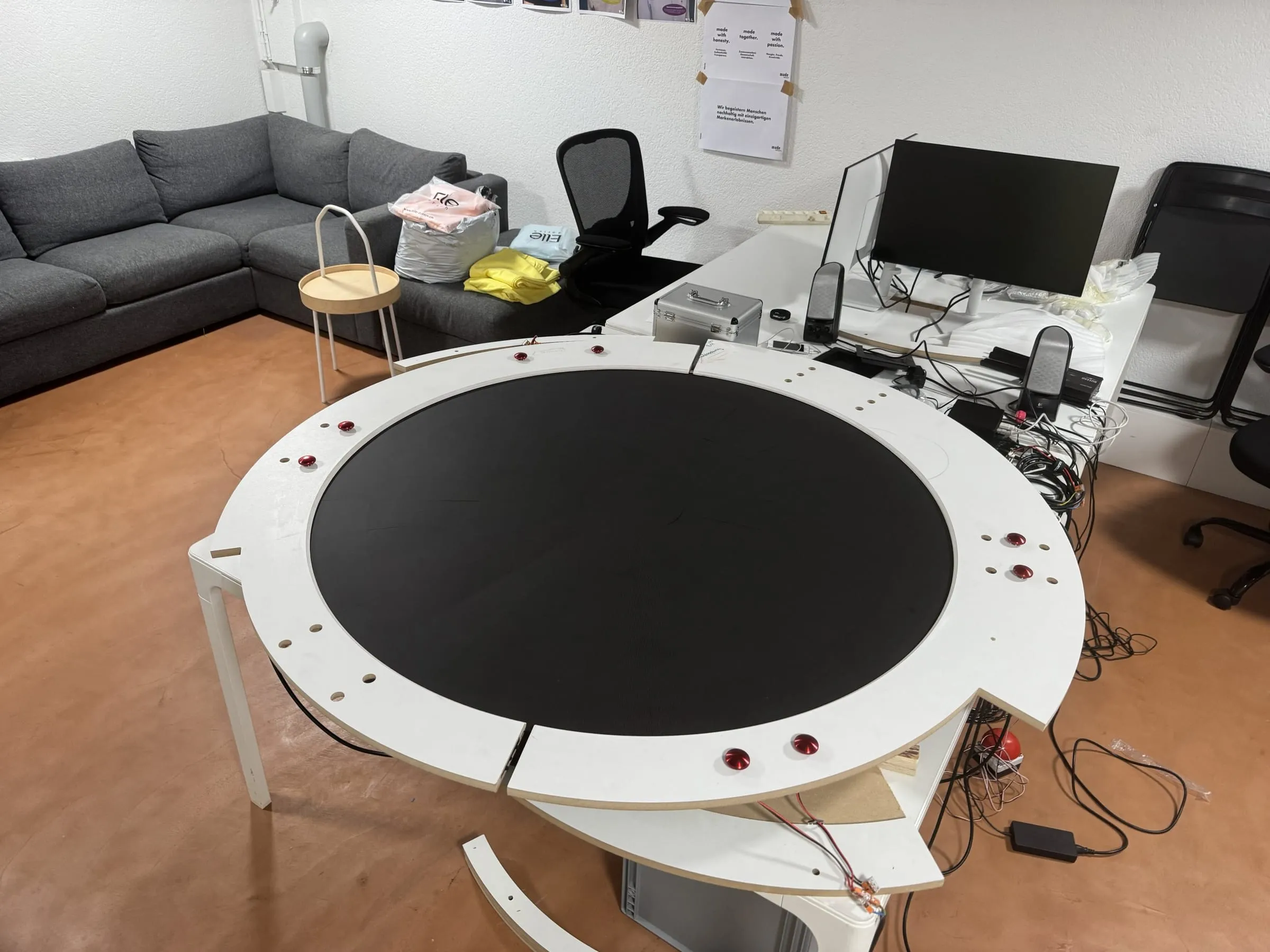
Whether a game feels right only shows in a test on the real thing. So we build a prototype early that runs on the real hardware. For the Mobiliar table we tried out the spacing, heights and positions of the buttons directly on the table until the controls felt intuitive.
Behind this is a principle we plan every project by: Risk first. Whatever can bring the project down, we test at the beginning and not shortly before the event.
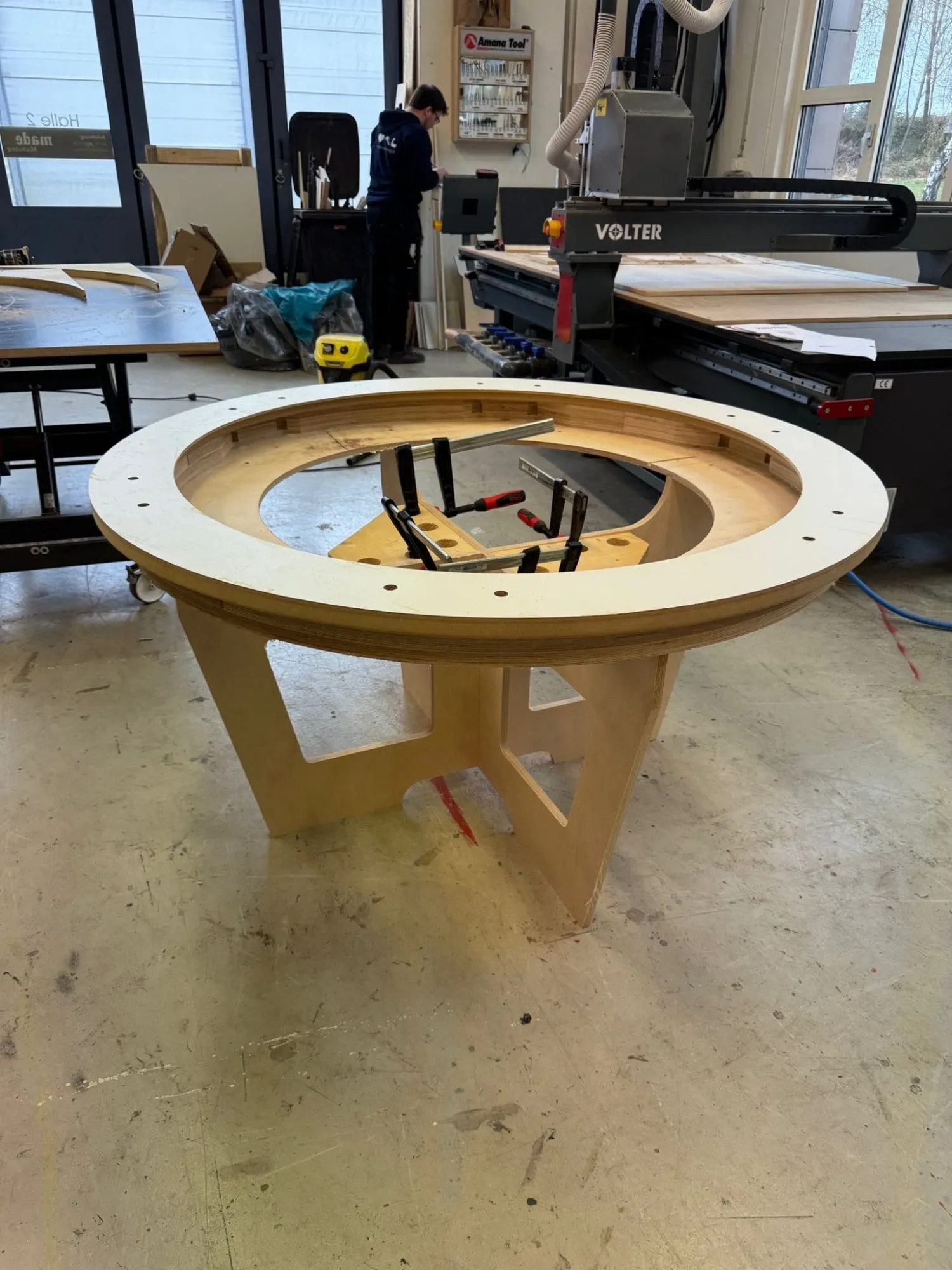
The housing from our own workshop
A game at an event is always a piece of furniture too. The housing has to stand out, survive many rounds of play and fit into a van. We developed and built the round game table for Mobiliar ourselves, with the focus on stability, transportability and a clean integration of the LED screen.
Ready for deployment
In the end the prototype becomes a device that works without us. That includes the languages (the Mobiliar game runs in German and French), the briefing of the promoters, the logistics and tests under real conditions. The Visana game toured 27 locations in Switzerland over a whole summer. The Mobiliar game was in use on every finals day of the four indoor sports and at the Nacht des Hallensports.
How long does it take, and what does it cost?
For a custom-developed game, allow 6 to 10 weeks from the idea to the first deployment. With a built housing, a game like this starts at around 15’000 francs. The price depends mainly on the game mechanic, programming, technical components, build, length of deployment and support on site.
More examples and formats under Gamification.